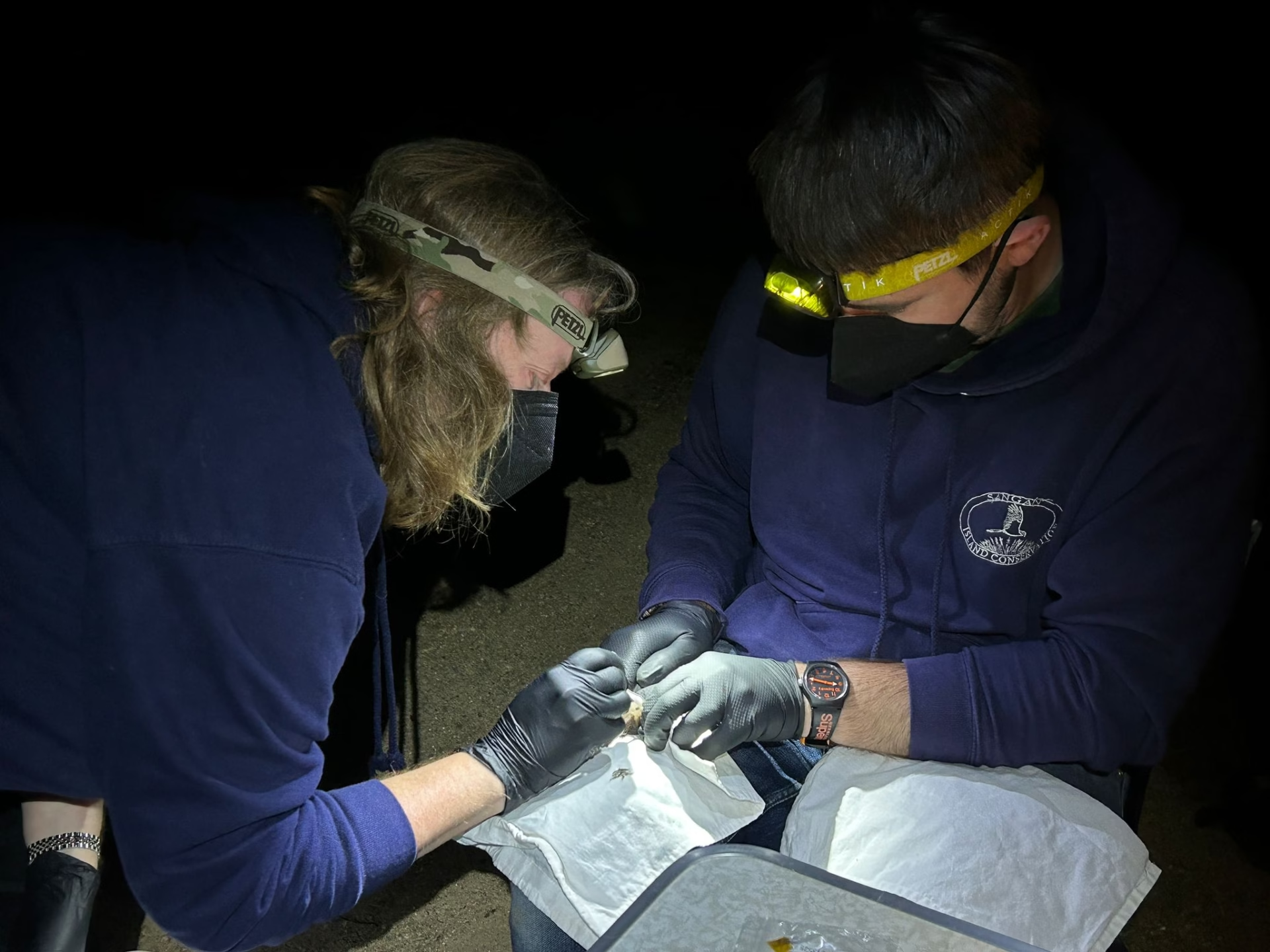
A joint project commenced in 2024 between the Zoology Section, the Jersey Bat Group and Jersey Marine Conservation to look at the bat usage of the Minquiers and Ecrehous reefs. Migratory bat species are protected under the Bonn Convention and EUROBATS, with the obligations under these conventions transcribed into local laws and policies.

The main migratory bat species in Europe are Nathusius’s pipistrelle (Pipistrellus nathusii), Noctule (Nyctalus noctula) and Leislers’s bat (Nyctalus leisleri). All of these species have been seen, from ringing programmes, to undertake migrations of over 1,500km between summer and winter grounds. Indeed, one of these ringing studies included a Nathusius’s pipistrelle that was ringed in Northern Germany and was recovered from a loft in St Martin in 1986.
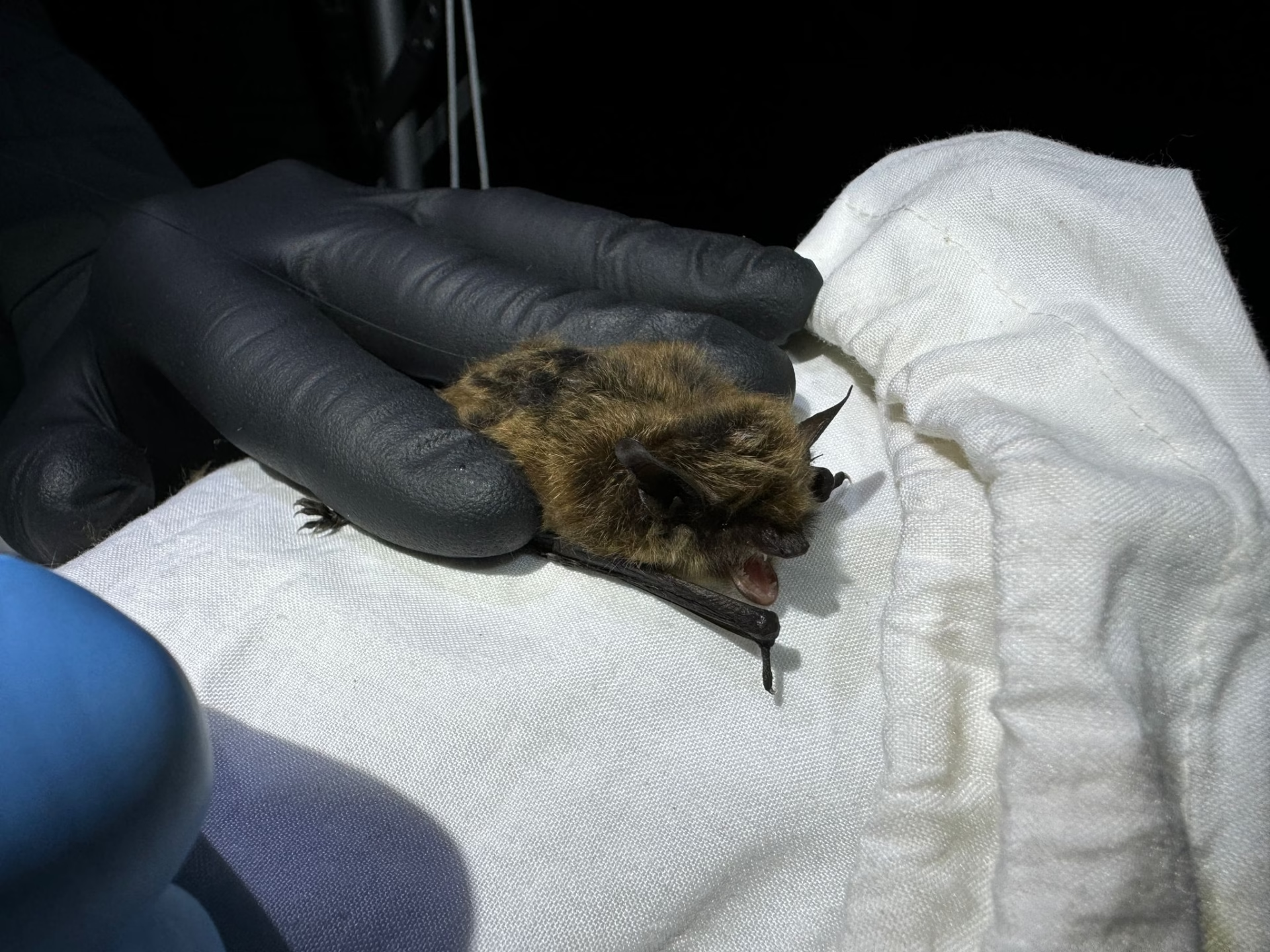
Whereas Noctules records for Noctules on Jersey are sparce, and consist of only a few acoustic records, Leislers’s bats have been recorded ‘in the hand’ twice, once in 2012 and again in 2024. Nathusius’s pipistrelles are encountered more commonly on the Island, with a number of maternity roosts known for this species.

For the research, passive acoustic bat detectors (Titley Rangers, Titley Scientific) were placed on the Minquiers in September 2024 and the Ecrehous in October 2024. The devices were set to record from 30 minutes prior to sunset until 30 minutes after sunrise. The detectors have inbuilt GPS, so all recorded acoustic files are georeferenced. The detectors also log temperatures and humidities for each day of deployment.
Data was uploaded to the BTO pipeline and classified to species using the cloud-based computing platform and superior algorithms. The BTO Acoustic Pipeline Tools (r Shiny app) was used to move audio clips into species folders on the basis of identifications returned by the Pipeline, and by setting levels of confidence in the species classification. A subset of the calls (all unusual species, and a percentage of more common species) were manually verified using Anabat Insight. Data were accepted at the 70% confidence level, meaning 2,341 bat calls for the Minquiers and 654 for the Ecrehous.

The initial findings from the detector on the Minquiers shows bat species using the reef that are known to migrate long distances such as Nathusius’s pipistrelle (Pipistrellus nathusii) and Leisler’s bat (Nyctalus leisleri) but also more sedentary species such as common pipistrelles (Pipistrellus pipistrellus sensu stricto) which have been recorded foraging within the site. The dominant migratory bat species recorded was the Nathusius’s pipistrelle (Pipistrellus nathusii) which accounted for 44.38% of the calls. Leisler’s bats (Nyctalus leisleri) accounted for just 0.85% of the total calls. There were several significant peaks in bat activity, with by far the largest being on 21st September. This peak accounted for 64.59% of total bat calls recorded in the 43 days of deployment.
The results for the Ecrehous are from a later deployment date (13th October – 22nd November rather than 15th September – 27th October 2024) than the Minquiers, and this likely explains the lower numbers of bat recordings during the 41 days of deployment, and the lower number of migratory bats recorded. Bat call analysis at the Ecrehous shows a dominance of use by Common pipistrelles (Pipsitrellus pipistrellus sensu stricto) which represented 97.86% of bats recorded.
The research will continue throughout 2025 and 2026.