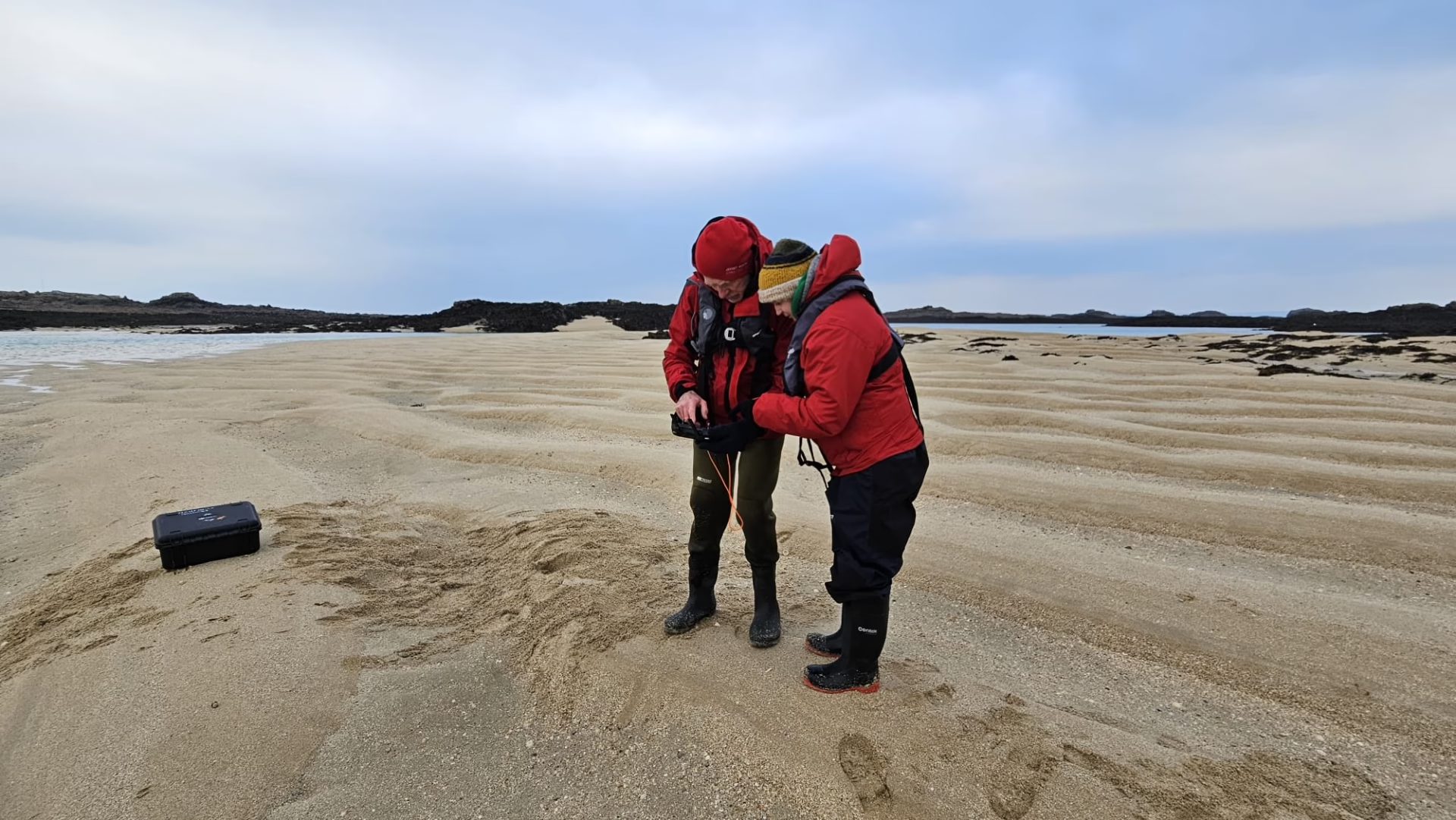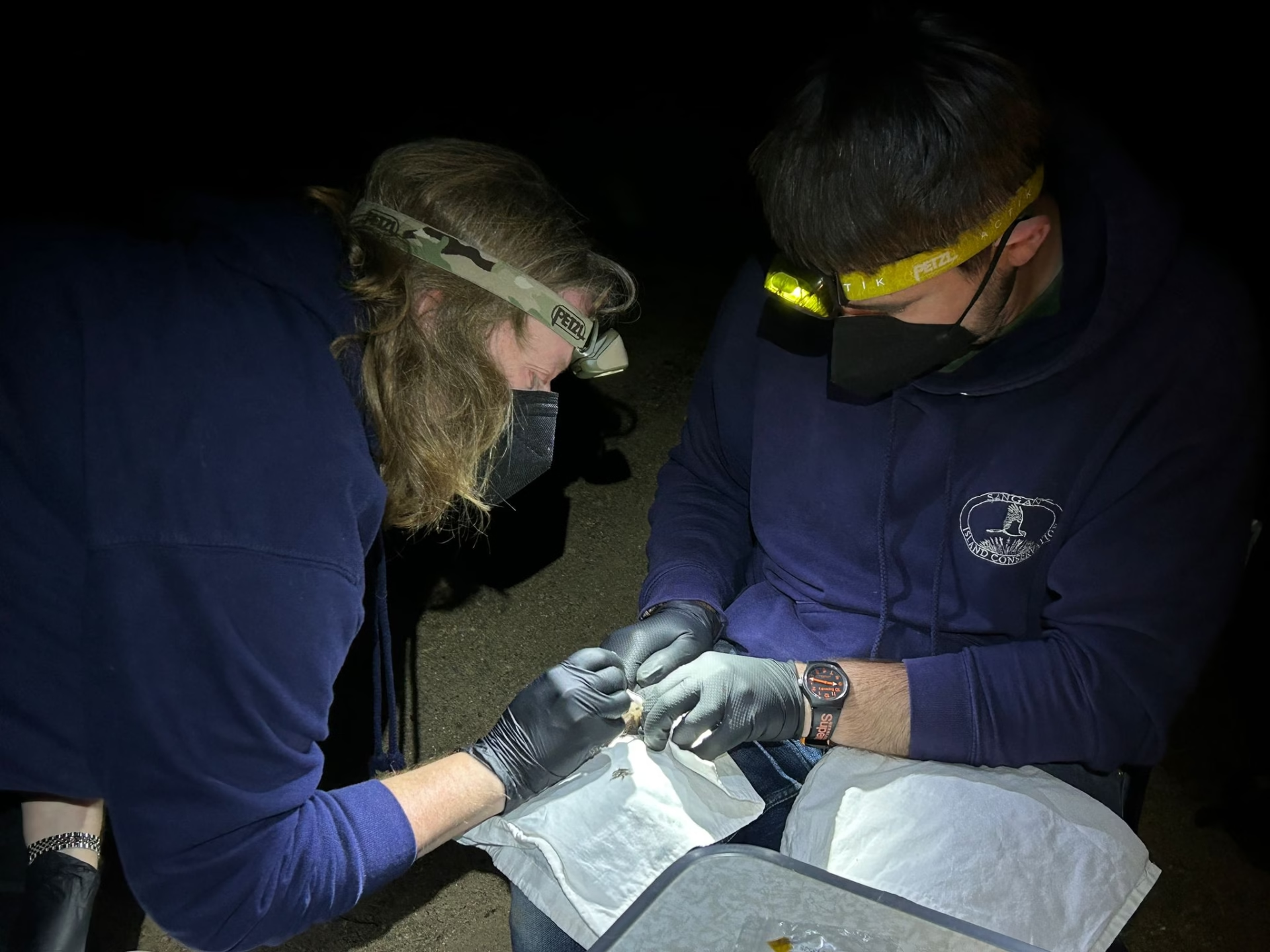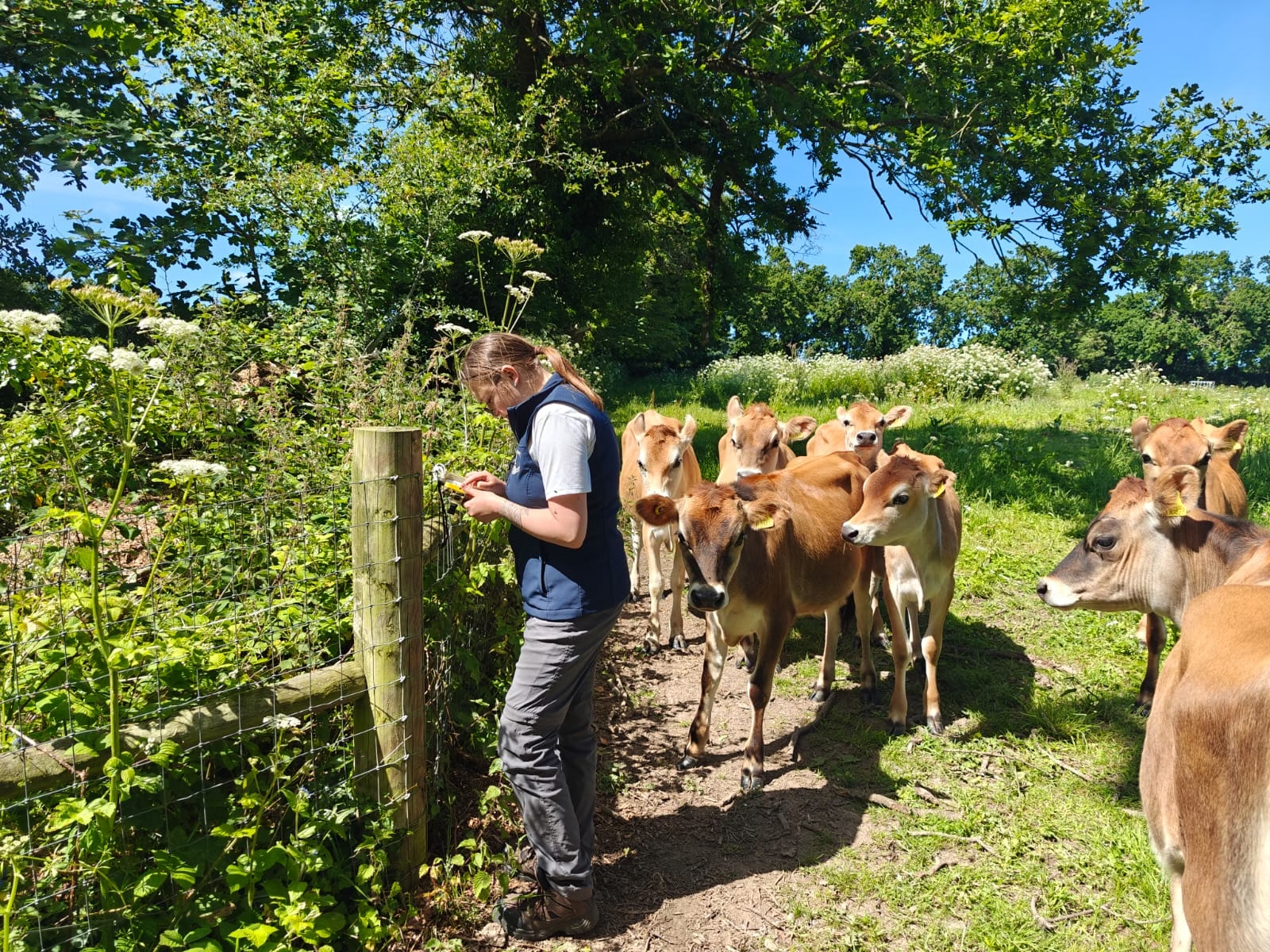
The co-chairs of the Zoology Section were in Guernsey between the 14th and 21st of August providing training in advanced bat survey techniques to members of the La Societe bat section. This being the third year that training has been offered in Guernsey in these techniques. To date 88 bats of 7 species have been caught.
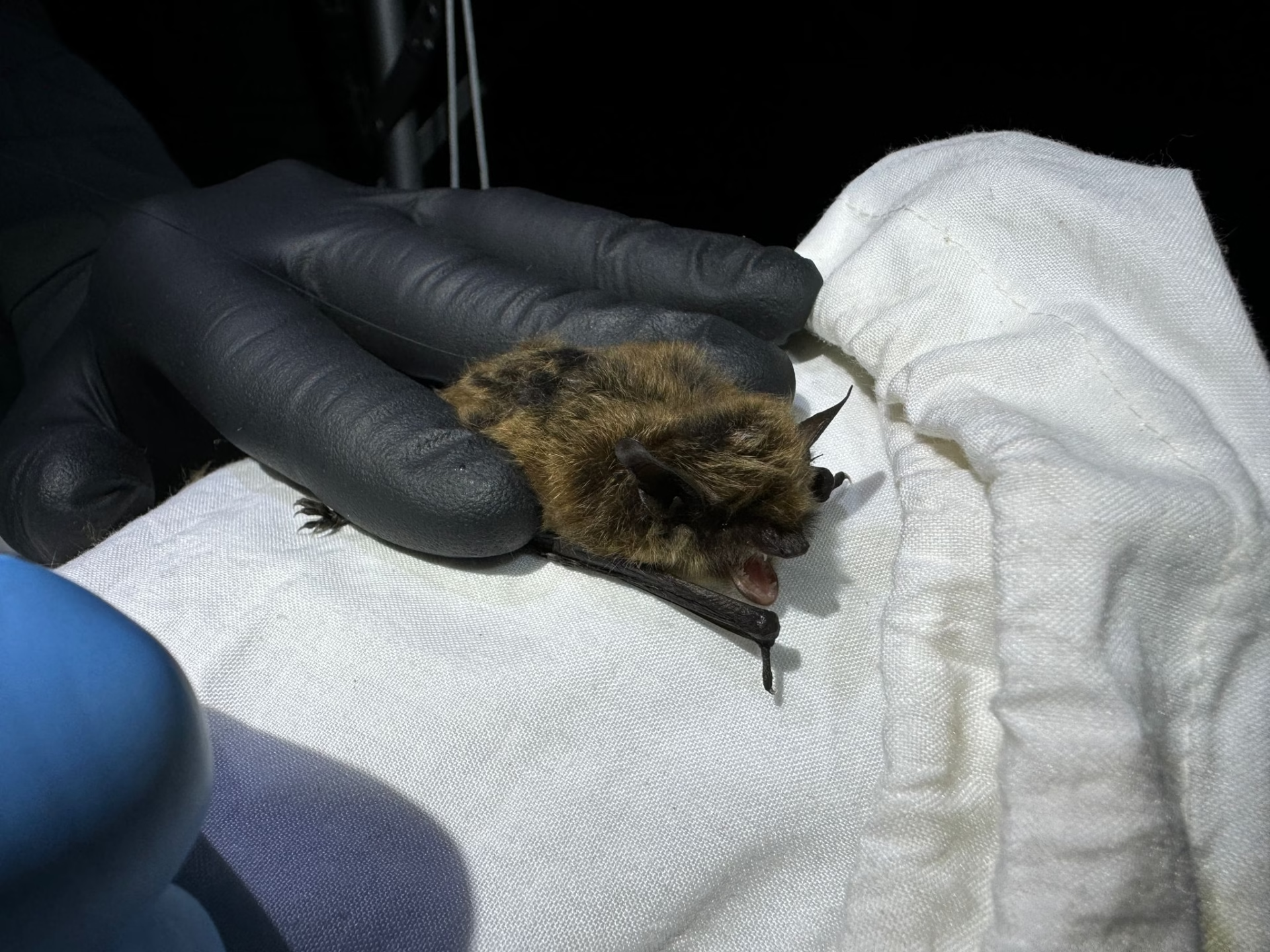
All bat trapping is undertaken under Guernsey licences issued under the Animal Welfare (Guernsey) Ordinance 2012 with permission to study or examine an animal in the wild where it is to be returned to the wild, including temporarily marking or tagging.
In previous years the training has identified a few ‘firsts’ for Guernsey, namely proof that Nathusius’s pipistrelles (Pipistrellus nathusii) are breeding in the Island, and the first confirmed ‘in the hand’ record of a brown long-eared bat (Plecotus auritus).
During the week of survey work, six sites across the Island were selected to trap bats using harp traps, these being St Saviour’s reservoir, Bluebell wood, Saumarez park, Le Guet, Tunnels near to Delancey Park and outside of the German underground hospital. A total of 34 bats were caught during survey efforts. Of these 34 bats, four were tagged, namely two Natterer’s bats (Myotis nattereri), one Kuhl’s pipistrelle (Pipistrellus kuhlii) and one Whiskered bat (Myotis mystacinus).
Captured bats were processed in the usual way, with biometrics being taken, and the age, sex and breeding status of the bat determined. Bat species whereby data is lacking, and where data is beneficial to the species are chosen for tagging. Bats are weighed to enable the tag size to be chosen.
Tags type was selected to be around 5% of the body weight of the bat being tagged, with AG337 tags (0.29g to 0.31g) being used for the lighter bats (these are the lightest tags in the Picopip range since the manufacturing of the AG190 which was 0.22g was stopped by the makers Lotek Ltd due to the unreliability of this tag), with slightly larger bats being tagged with AG317 (0.38 to 0.39g).
In total four bats were tagged and radio tracked, namely two Natterer’s bat (Myotis nattereri), 1 Kuhl’s pipistrelle (Pipistrellus kuhlii) and one Whiskered bat (Myotis mystacinus). The whiskered bat was of species note and interest.
For several years the Bailiwick Bat Survey has been recording what was considered to be either Whiskered (Myotis mystacinus) or Brandt’s (Myotis brandtii) bats. To enable full verification as to which species the bat was, it was necessary to have the bat ‘in hand’ to enable a review of the distinguishing features between these two bat species. Three harp traps (two Ecotone, and one Ausbat) were erected at a site known to have had good numbers of the acoustic call files from the 2023 Bailiwick Bat Survey results. No acoustic lures were used. One small myotis was caught, with this being weighed, the forearm measured, and the dentition examined. The bat was confirmed to be a Whiskered bat (Myotis mystacinus).
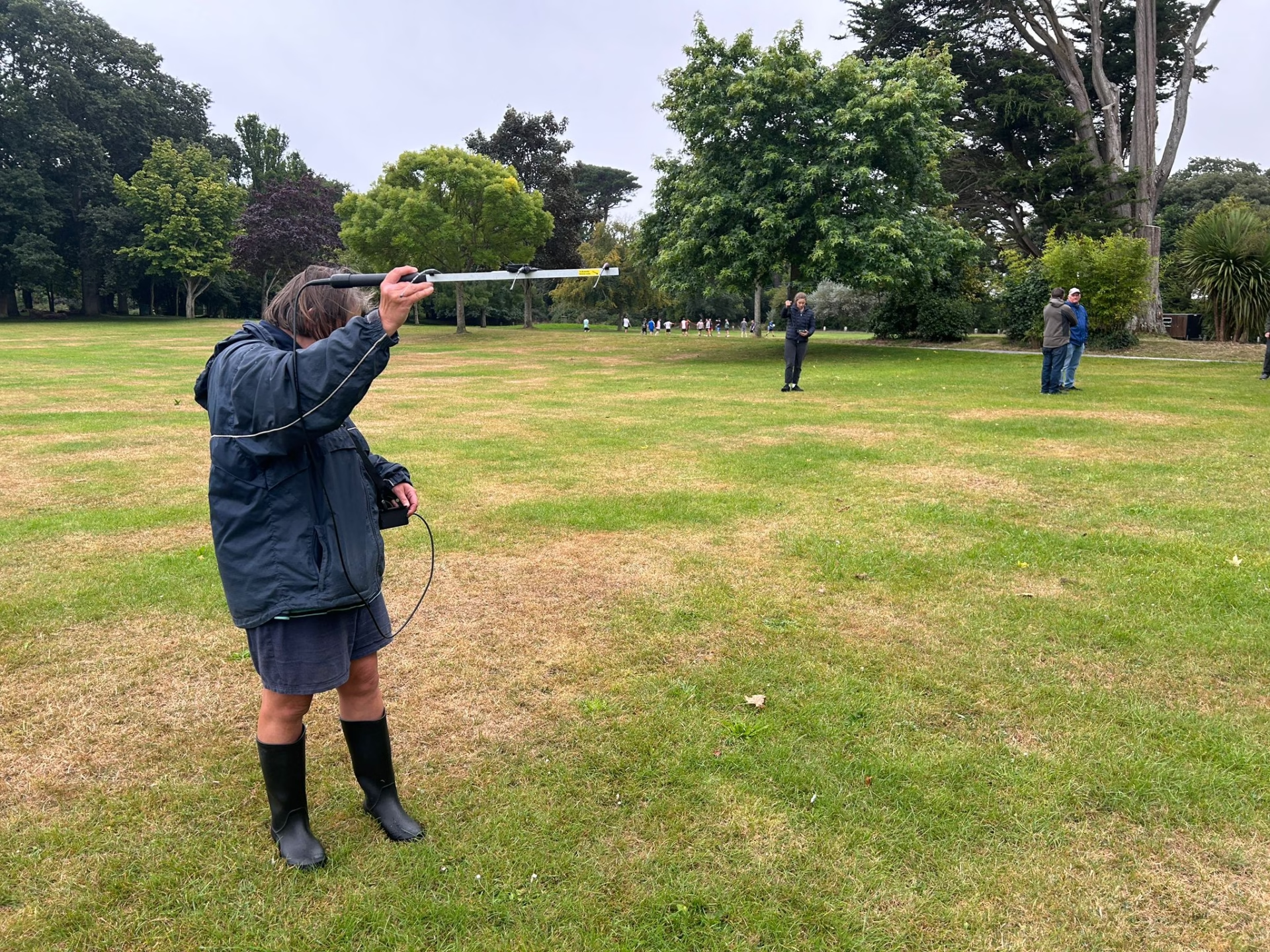
Radiotags were affixed to the bats using a temporary latex adhesive to enable the bat to be radio-tracked back to the roost site using a Lotek Biotracker VHF Receiver and a Lotek LITEFLEX 3-Element VHF Yagi Antenna tuned to the tag’s frequency (in the 173Mhz band). The location of the roosts were searched for during daylight hours, with bats also being tracked during night time where possible.
The radio-tracking results from the two Natterer’s bats lead to the discovery of six tree roosts for this species, the first confirmed tree roosts for the Island, with the roosts being around Saumarez Park and environs, the Little Chapel and Fauquet Valley. The Kuhl’s pipistrelle led us to only the second roost recorded for the species in the Island.
The radio-tracking results from the two Natterer’s bats (Myotis nattereri) lead to the discovery of at least six tree roosts roosts for this species, the first confirmed tree roosts for the Island, with the roosts being around Saumarez Park and environs, the Little Chapel and Fauquets Valley.
The Kuhl’s pipistrelle (Pipistrellus kuhlii) led us to only the second roost recorded for the species in the Island. This bat was located in this roost for one night only, and then the frequency of this tag could not be further located.
The Whiskered bat (Myotis mystacinus) roost was the first for this species in the Island. An emergence survey was conducted by the Guernsey Bat Section on 19th August 2024. Only one bat (the tagged individual) was seen to emerge. The significance of this roost, and the possible use of the Delancey Tunnels as a swarming site for this species needs further investigation.