
28 November 2022
As part of our continuing commitment to the island’s environment, we run the Jersey Grey Long-eared Bat project to undertake research to improve the island’s understanding of the species’ ecology and to help improve conservation efforts.
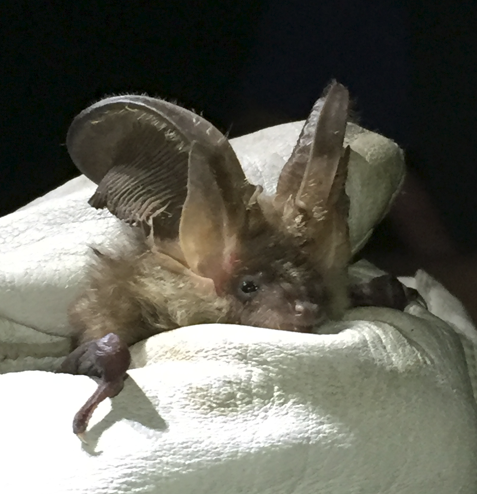
This summer’s heatwave may have had a heartbreaking consequence for one of Jersey’s rarest bat species. Following June’s extreme temperatures, our founder Piers Sangan discovered that two maternal roosts of grey long-eared bats had suffered catastrophic losses — with up to 100% of this year’s pups potentially lost.
While adult bats were able to abandon the roosts and move somewhere cooler, the juveniles couldn’t make that transition. As Piers told BBC News: “Basically, a generation died from the heatwave.” Had the heat arrived just a week earlier or later, the outcome might have been very different — the pups would either have been small enough to be carried to safety, or old enough to fly themselves.
The grey long-eared bat is already critically endangered in the UK, with fewer than a thousand individuals remaining. In Jersey the species is considered under-recorded, partly because it is acoustically very quiet and is easily missed by standard survey methods — which is exactly why the Jersey Grey Long-eared Project exists.
We’ll be watching the population closely in the years ahead. The long-term impact remains unknown, but there will be adults missing from the population down the line — a sobering reminder of what climate change could mean for species already on the edge.