19 August 2024
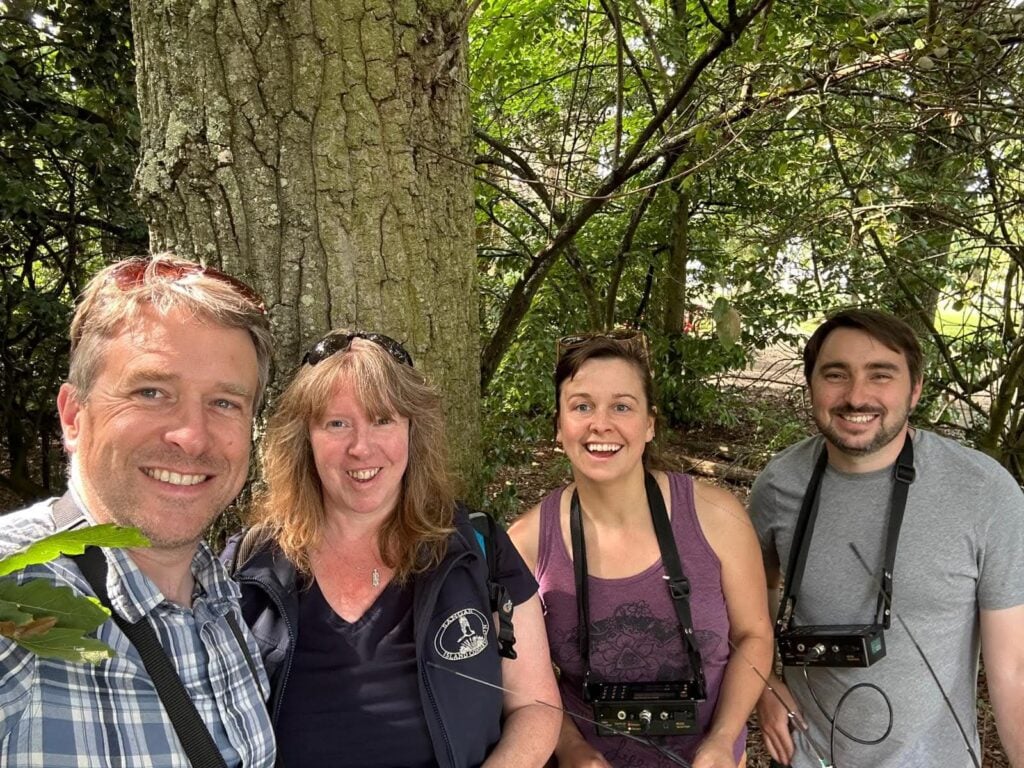
Every August, the co-chairs of the Zoology Section travel over to Guernsey for an intensive week, working alongside La Société’s bat section to share advanced survey techniques. This is now the third consecutive year the training has run, and the collaboration has resulted in 88 bats across 7 species being caught and recorded to date, a dataset most island bat groups would be proud of.
This year’s training, running from the 14th to the 21st of August, added some genuinely new findings to Guernsey’s bat conservation record.
A week in the field
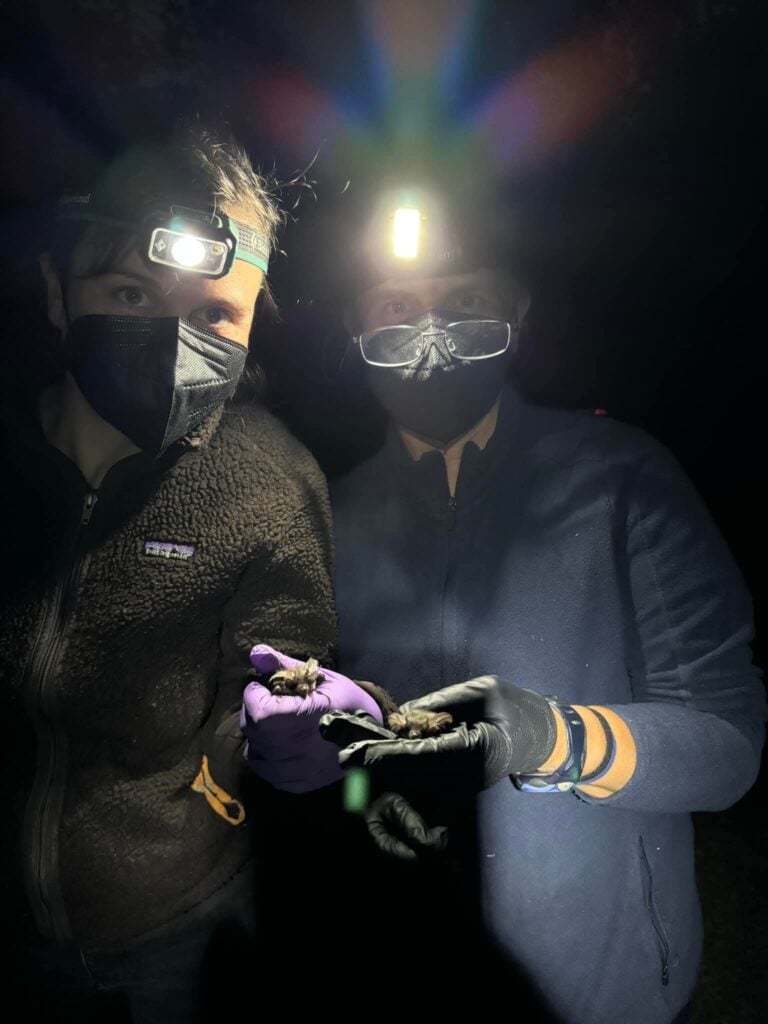
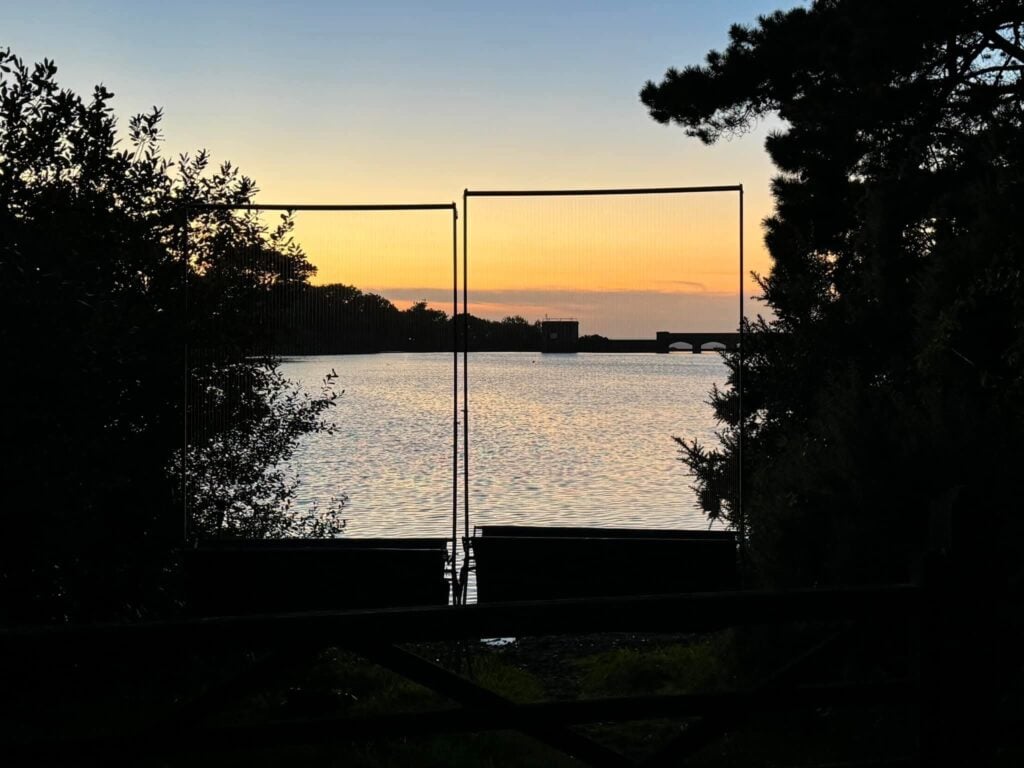
Six sites were chosen across the island for trapping: St Saviour’s reservoir, Bluebell Wood, Saumarez Park, Le Guet, the tunnels near Delancey Park, and the area outside the German underground hospital. Using harp traps, the team caught 34 bats over the week, all under licences issued through the Animal Welfare (Guernsey) Ordinance 2012.
Of those 34, four were selected for radio-tagging: two Natterer’s bats, one Kuhl’s pipistrelle, and one whiskered bat. Tagging decisions aren’t taken lightly. Species are chosen where existing data is thin and where new information would genuinely help inform conservation efforts. Tags are sized at roughly 5% of a bat’s body weight, so each bat was weighed first to determine whether it needed the lighter AG337 tag (around 0.3g) or the slightly larger AG317 (around 0.38g).
Solving a years-long identification puzzle
One of the quieter successes of the week involved a bat that wasn’t even new to the records. It was a question mark that had been sitting in the data for years. The Bailiwick Bat Survey had long picked up acoustic calls that could belong to either a whiskered bat (Myotis mystacinus) or a Brandt’s bat (Myotis brandtii), two species that are notoriously difficult to tell apart from sound alone.
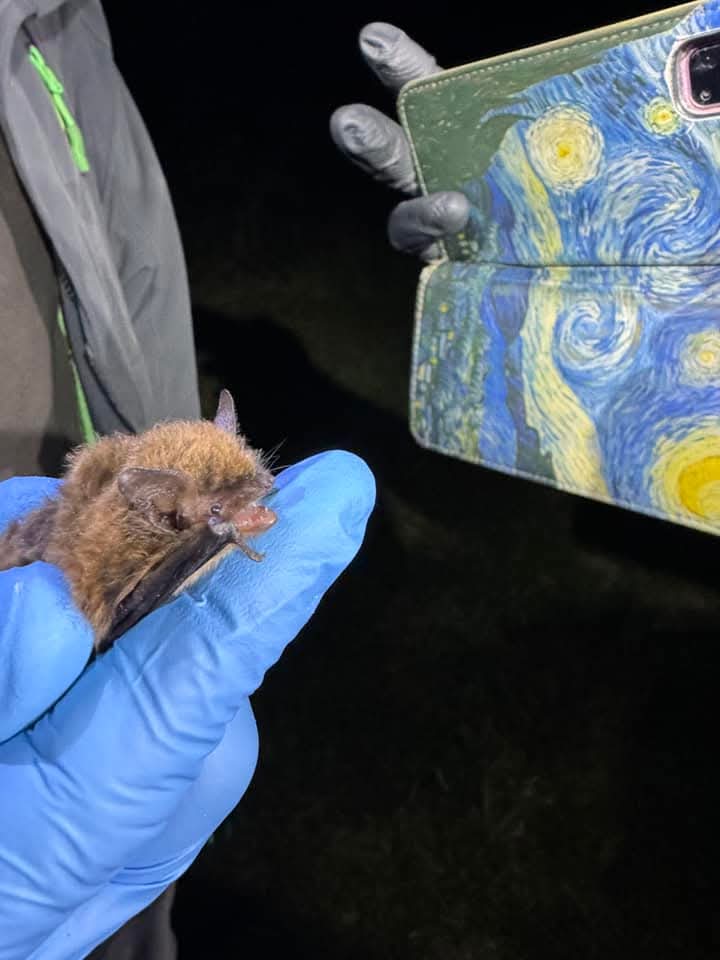
Settling the question meant getting a bat in the hand. Three harp traps were set at a site known for producing this exact call type, with no acoustic lures used to avoid biasing the catch. A single small myotis bat was caught, and a careful examination of its weight, forearm length, and dentition confirmed it as a whiskered bat. It’s a small piece of detective work, but one that sharpens the accuracy of years of acoustic survey data.
Following the bats home
With tags fitted using a temporary latex adhesive, the team tracked each bat back to its roost using a Lotek Biotracker VHF receiver and Yagi antenna, working across both day and night to pin down exact locations.
The two tagged Natterer’s bats led researchers to six separate tree roosts around Saumarez Park, the Little Chapel, and Fauquet Valley, the first confirmed tree roosts for this species ever recorded in Guernsey. The Kuhl’s pipistrelle led to only the second roost ever documented for the species on the island, though the signal was only held for a single night before the tag could no longer be located.
The whiskered bat’s roost was the first ever recorded for the species in Guernsey. An emergence survey carried out by the Guernsey Bat Section on the 19th of August saw only the tagged individual leave the roost that night, which raises an interesting question about whether the Delancey Tunnels might be functioning as a swarming site for the species. This will need further investigation to confirm.
Why this matters
This kind of result is the product of three years of sustained training, trust-building, and fieldwork between the Zoology Section and La Société’s volunteers. It’s the kind of patient, collaborative work that rarely makes headlines but is exactly how new tree roosts, new species records, and better data get found. Six new Natterer’s bat roosts and a first-ever roost record for whiskered bats in a single week is a strong return on that investment, and it’s down to the volunteers who give up their evenings, as much as anyone, to make it happen.
There’s more to learn here, particularly around that whiskered bat roost and the possible swarming behaviour at Delancey Tunnels. For now, though, Guernsey’s bats have given up a little more of their secrets, and the island’s conservation record is richer for it.