
10 January 2025
Bats and Offshore Reef Project
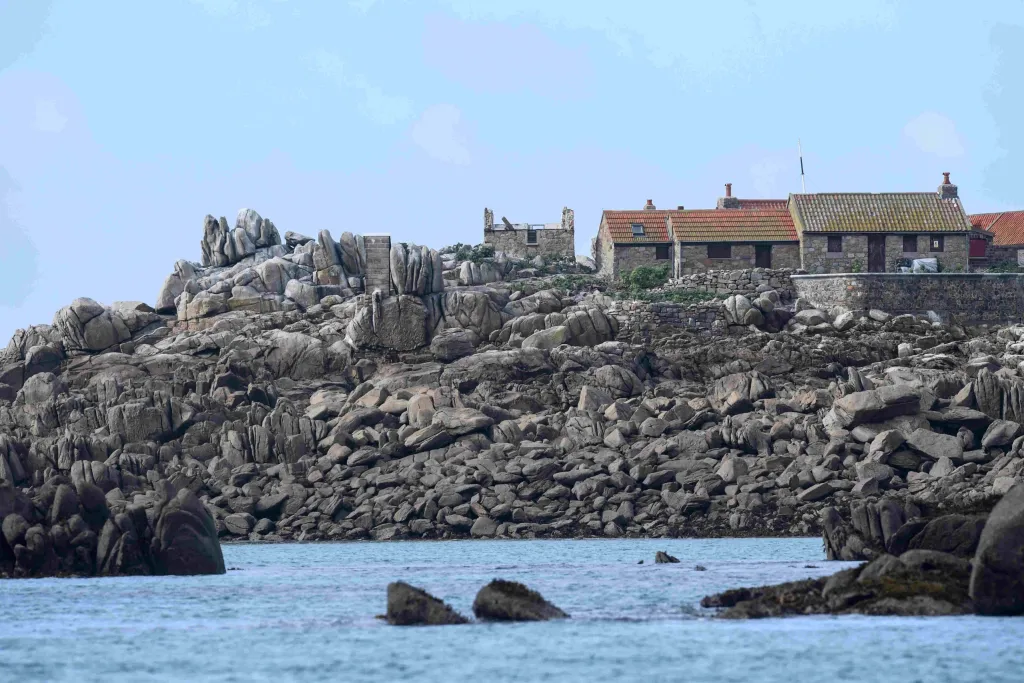
[Picture credit: David Ferguson]
Twenty kilometres south of Jersey, the Minquiers reef rises out of the sea as a scatter of granite islets, better known for grey seals, one of the largest breeding populations of bottlenose dolphins in the British Isles, and the seabirds that nest along its rocks. Together with the Écrehous to the northeast, both reefs hold Ramsar wetland status, recognised internationally for the life they support both above and below the waterline.
What nobody had ever asked, until 2024, was whether bats used them too.
That question became a joint project between the Société Jersiaise Zoology Section, the Jersey Bat Group, and Jersey Marine Conservation, with our team at Sangan Island Conservation contributing staff time and expertise, free of charge, to service the detectors and analyse the resulting calls. It’s the kind of cross-organisation collaboration that island conservation depends on, and one we were glad to be part of.
Why bother looking at bats out at sea
Several of Europe’s bat species are long-distance migrants, travelling more than 1,500km between summer and winter grounds, journeys documented through decades of ringing studies. Nathusius’s pipistrelle, the noctule, and Leisler’s bat are the three main migratory species recorded in the region, and all three are protected under the Bonn Convention and EUROBATS, obligations that are written into Jersey’s own laws and policies.
One ringing record in particular captures just how far these journeys can stretch: a Nathusius’s pipistrelle ringed in northern Germany was later recovered from a loft in St Martin, Jersey, in 1986. Locally, the picture is patchier. Noctule records on the island are sparse, limited to a handful of acoustic detections, while Leisler’s bat has only been confirmed in the hand twice, once in 2012 and again in 2024. Nathusius’s pipistrelle is the most familiar of the three here, with several known maternity roosts on the island. What was missing was any sense of whether these species, or Jersey’s more common residents, made use of the open water and exposed reefs between the island and the French coast.
Listening from the rocks
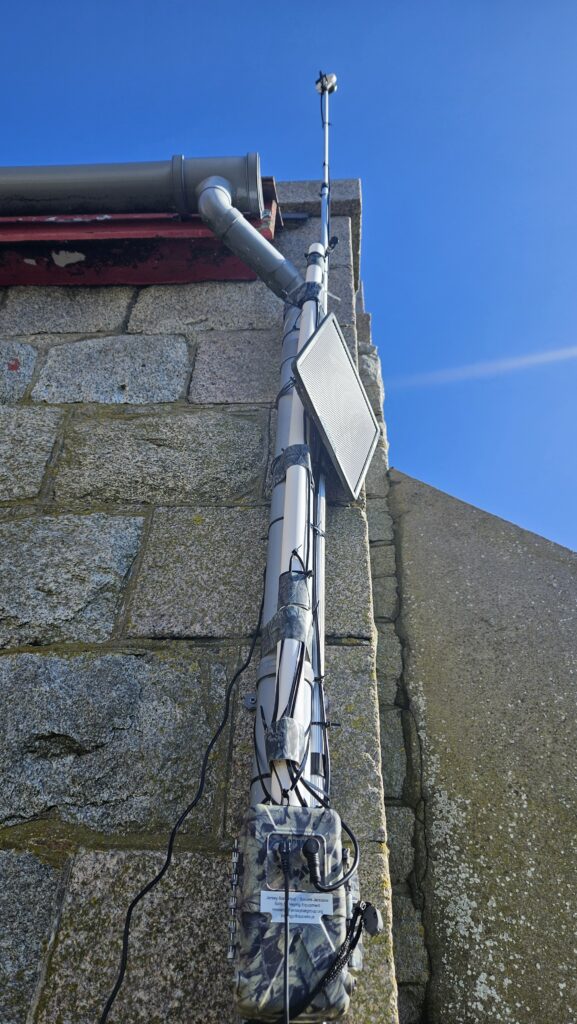
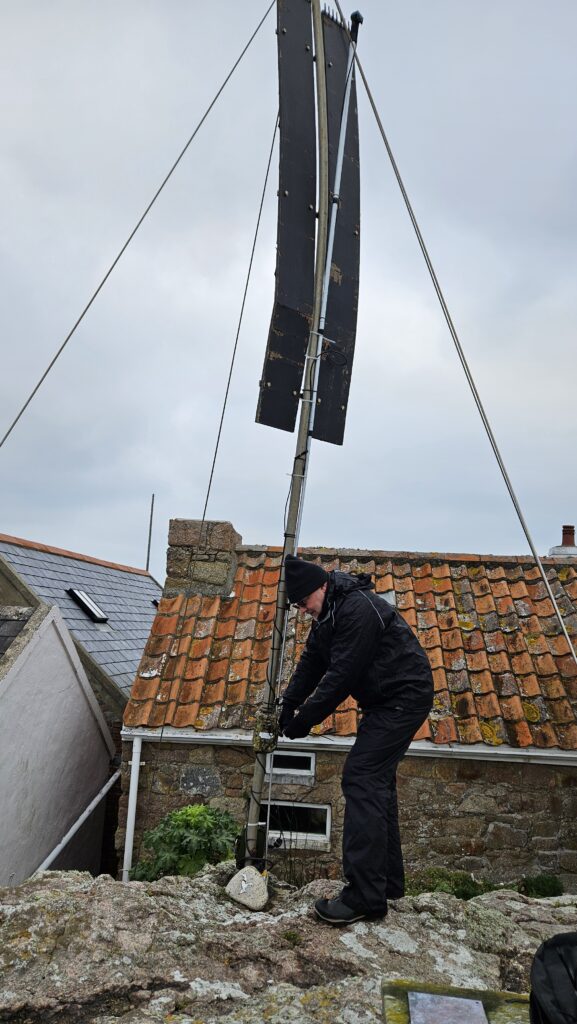
Passive acoustic detectors (Titley Rangers) were installed on La Maîtresse Île, the largest islet in the Minquiers, in September 2024, with a second unit following at the Écrehous in October. Each detector ran automatically every night, recording from half an hour before sunset to half an hour after sunrise, with built-in GPS to georeference every file and sensors logging temperature and humidity throughout the deployment.
Getting the equipment out there and keeping it running was its own challenge. Both reefs are tidal, exposed to salt spray and strong winds, and only accessible within certain weather and tide windows, so deployment and servicing visits had to be planned carefully around all three.
The recordings were processed through the BTO Acoustic Pipeline and its companion Shiny app, which sorts audio files into species folders based on classification confidence. Calls were accepted at a 70% confidence threshold, and a subset, including every unusual species and a portion of the more common ones, was manually checked against the automated calls using Anabat Insight to keep the identifications as reliable as possible.
What the detectors picked up
The Minquiers detector ran for 43 days, from the 15th of September to the 27th of October, and logged 2,341 confirmed bat calls. Nathusius’s pipistrelle was the standout species, accounting for 44.38% of all calls, alongside common pipistrelles and serotine bats recorded foraging at the site. Leisler’s bat made up a smaller 0.85% of the total. Activity wasn’t spread evenly across the deployment either: a single night, the 21st of September, accounted for 64.59% of every bat call recorded across the full six weeks, a striking spike that raises its own questions about what conditions might draw bats out to the reef in such numbers.
The Écrehous detector, running 41 days from the 13th of October to the 22nd of November, told a different story. Confirmed calls there totalled 654, considerably fewer than at the Minquiers, likely reflecting both the later deployment window and the seasonal drop-off in migratory activity. Common pipistrelles dominated almost entirely, making up 97.86% of everything recorded.
Dr Amy Louise Hall, Chair of the Société Jersiaise Zoology Section, has described the early results as fascinating, noting that activity on the Minquiers seemed to pick up on nights with low tides, and that while the project had been set up with migratory species in mind, finding resident bats foraging so frequently at the site was an unexpected and welcome result in itself.
Why this matters
This is the first systematic record of bat activity on exposed offshore reefs anywhere in the Channel Islands, and it adds genuinely new evidence to a wider European picture that, until now, has had very few empirical data points from marine environments this far from land. It also speaks directly to the legal obligations Jersey holds under EUROBATS and the Ramsar Convention to research and share data on the species using its wetlands, and it lands at a useful moment given ongoing discussions about offshore wind development in Jersey’s waters, where understanding how bats use these same areas will matter for planning decisions still to come.
Monitoring is continuing through 2025, with both reefs due for further seasons of data.
None of this would have been possible without the associations of Les Minquiers and Les Écrehous granting permission to install the detectors, the Natural Environment team’s support, and the former Assistant Environment Minister Gregory Guida personally financing the project. It’s a reminder of how much island conservation work runs on goodwill, volunteer time, and organisations choosing to pool what they have, which is exactly the spirit this project was built on.