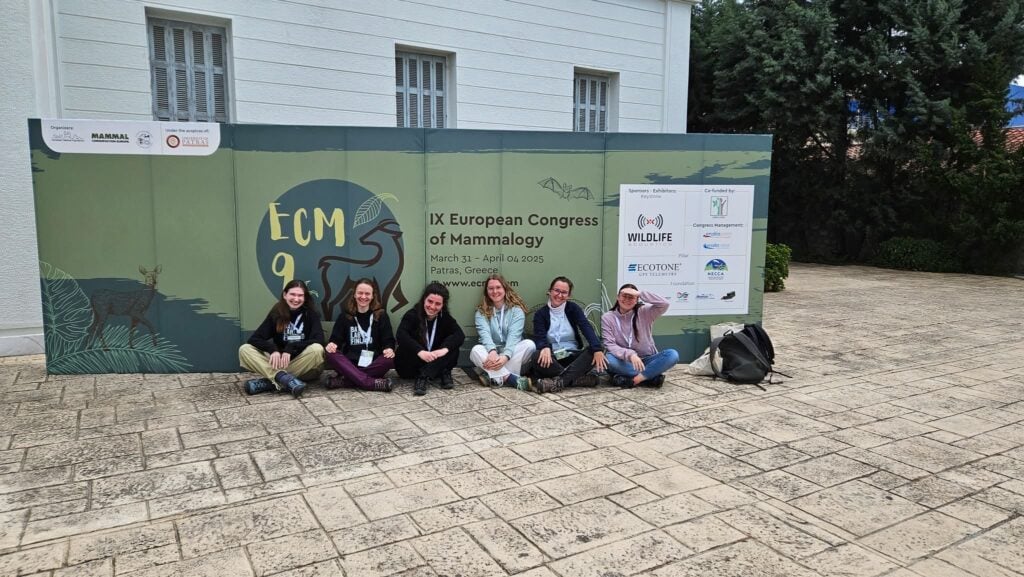
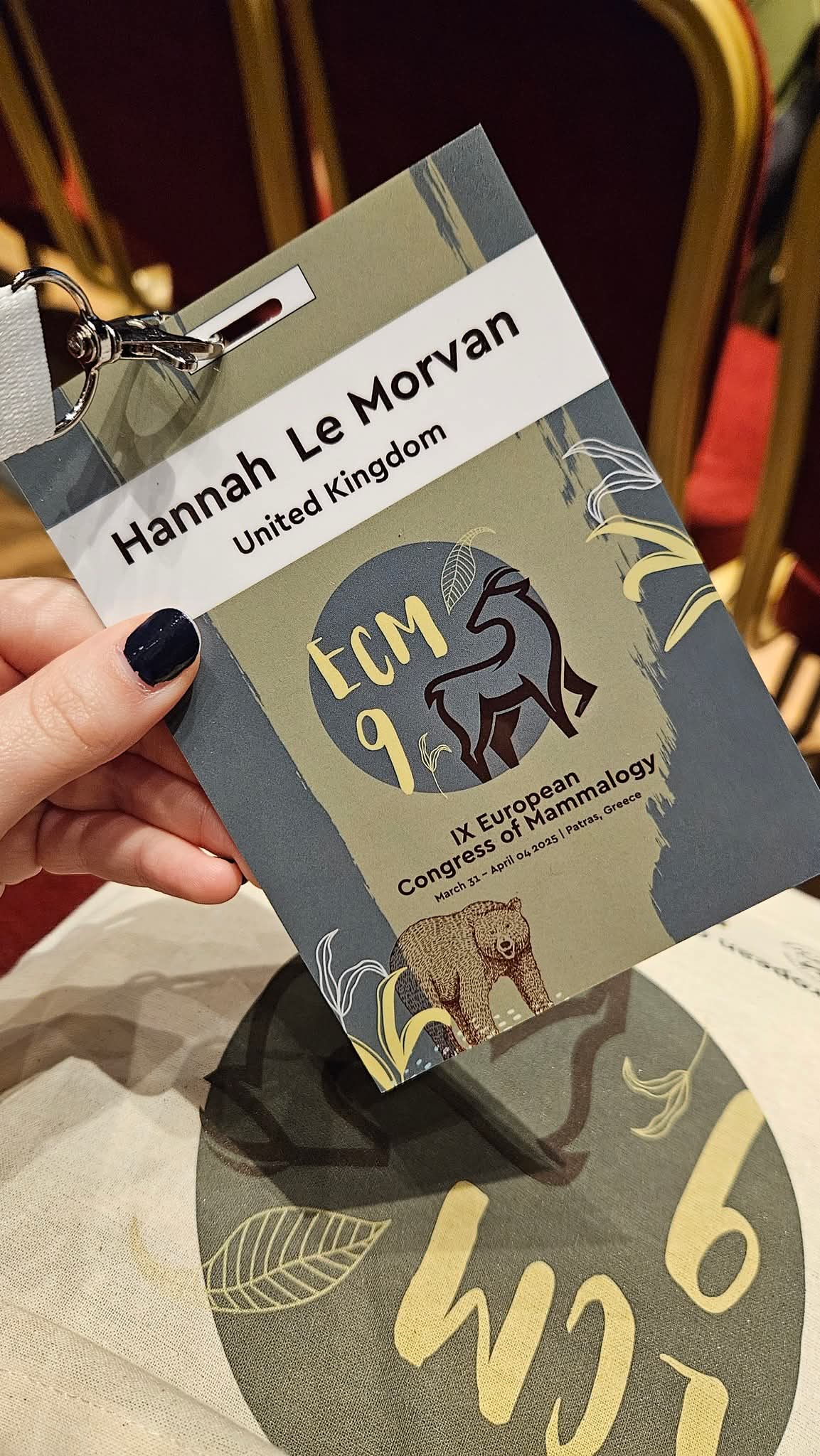
Our Research Ecologist, Hannah Le Morvan, has just returned from the IX European Congress of Mammalogy in Greece. Find out how it went below!
Hi all!
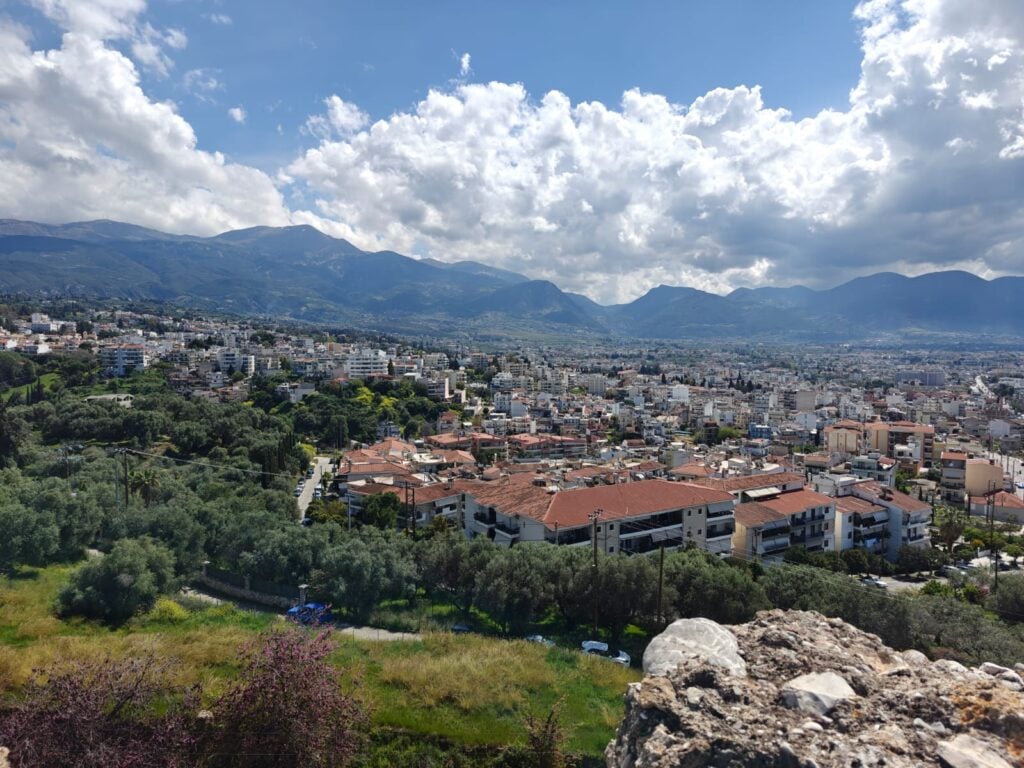
I have just got back from the IX European Congress of Mammalogy in Patras, Greece – and what an inspiring week it has been!
The conference brought together leading mammalogists from across Europe (and the world!) – from long-standing academic researchers to conservation practitioners working in the field – all united by a passion for understanding and protecting the mammals we share our world with. Topics ranged from innovative tracking and survey techniques (including eDNA, camera trapping, and even tracking bears from flies!) to in-depth ecological theory, species conservation strategies, and everything in between.
Representing our company and our research from Jersey at such a high-calibre event was a real privilege. What stood out to me the most was how well our work fits into the broader international scientific conversation. While many consultancies operate at the interface of planning and policy, few are actively contributing to the science that underpins best practice – and that’s where we’re proud to be different.
At our core, we’re a consultancy that values scientific rigour. We’re not just ticking boxes – we’re actively engaging with and contributing to emerging research. Our ongoing projects – with our island bats and a PhD on small mammal island ecology – sit comfortably alongside cutting-edge studies presented at the congress. In particular, it was brilliant for me personally to connect with colleagues in Crete who are working in parallel with my own research conducting acoustic sampling on the fantastic range of shrew species they have, including the endemic and Endangered Crocidura zimmermanni. For me, this was certainly the highlight to learn how both our projects fit into a wider puzzle piece and how we can build collaborations going into the future.
Another clear theme throughout the conference was the growing need for ecological science to be practically applied – particularly in relation to development and infrastructure projects. Whether it was wind farms, urban expansion, or transport schemes, its evident that aligning ecological research with real-world decision-making is increasingly complex. There were many discussion about the tensions that can arise between ecological priorities and development needs – a reality that we are also familiar with in our consultancy work.
And this isn’t just hypothetical anymore. Across the UK and elsewhere, there are mounting political pressures to roll back species protections in the name of accelerated housing targets and economic growth. These are no longer future threats – they are happening right now, and it’s never been more important to ensure that ecological work is not only heard, but taken seriously in policy and planning.
We believe that working collaboratively and constructively with developers, while maintaining scientific integrity, is absolutely key. Our role is to bridge the gap – providing reliable, research-informed ecological insight that supports both conservation and responsible development.
Attending the conference also gave me the chance to reflect on our own unique position. As ecologists based in Jersey, we bring an island perspective that is often under-represented in larger-scale studies. Our work helps to fill those gaps – and its increasingly clear how important it is for islands like Jersey to contribute to international biodiversity monitoring efforts, particularly in the face of climate and land-use change.
Personally, I came away feeling incredibly inspired – not just by the fascinating talks and new methods, but by the reminder that ecological consultancy can (and should) be included towards real scientific impact. We’re excited to keep building on this momentum, strengthening the links between research and practice, and continuing to make our mark – both on island and beyond.
A huge thank you to the organisers and the wider mammal research community for such a warm welcome. Here’s to the future of mammal ecology – and to making sure consultancy is part of it.