7 February 2024
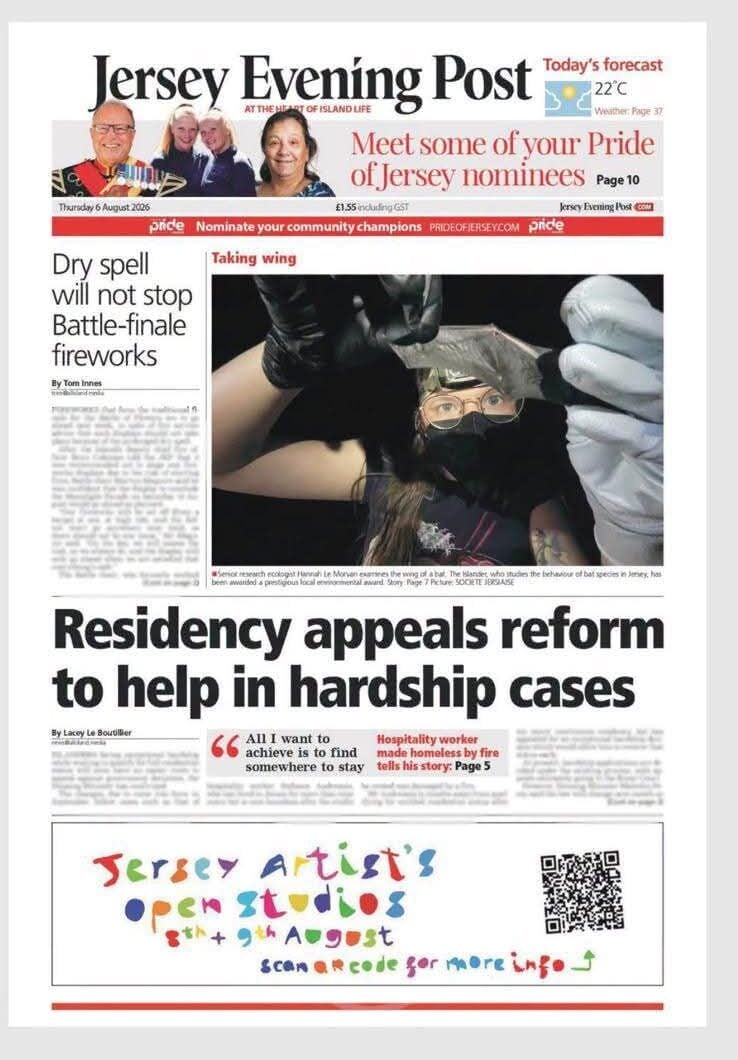
Exciting News: Jersey Community Foundation Funding for Hannah’s PhD Project! 🎉🦇
We are absolutely thrilled to announce that Hannah Le Morvan’s PhD research project has been awarded £26,500 in funding from the Jersey Community Foundation, a huge achievement and a landmark moment for small mammal conservation research here in the Channel Islands!

About the Project
Hannah’s PhD, undertaken through the University of Exeter in partnership with Sangan Island Conservation and the British Trust for Ornithology (BTO), is focused on developing and validating passive acoustic monitoring (PAM) methodologies for small mammals across the Channel Islands. The project sits at the cutting edge of ecological survey methodology — and this funding will allow it to reach its full potential.
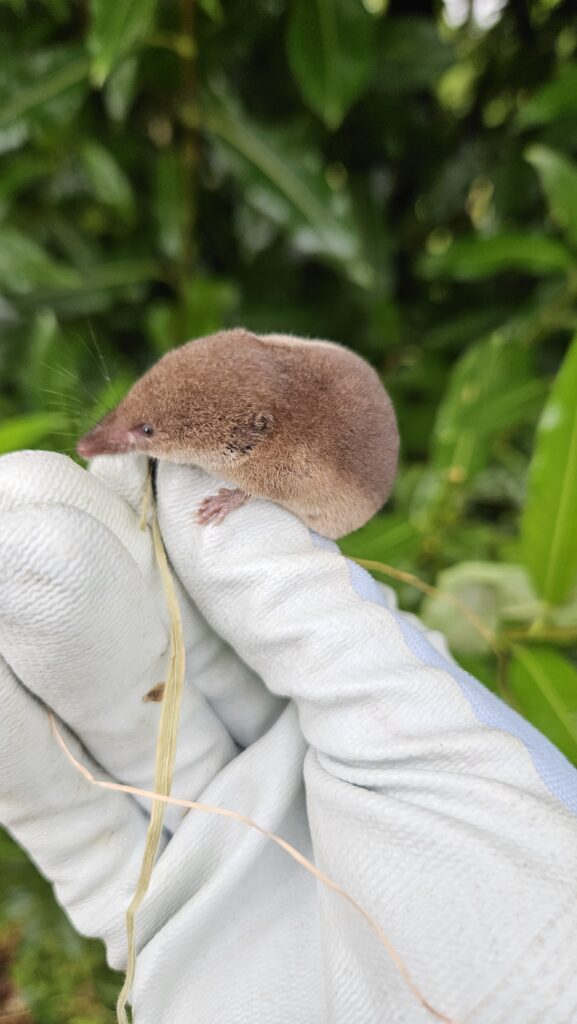
Jersey is home to two protected shrew species: the Lesser White-toothed Shrew (Crocidura suaveolens) and the Millet’s shrew (Sorex coronatus). Despite their protected status, surprisingly little is known about their island-wide distribution, abundance, or how they may be responding to environmental pressures such as climate change. Hannah’s research aims to change that.
How the Research Works
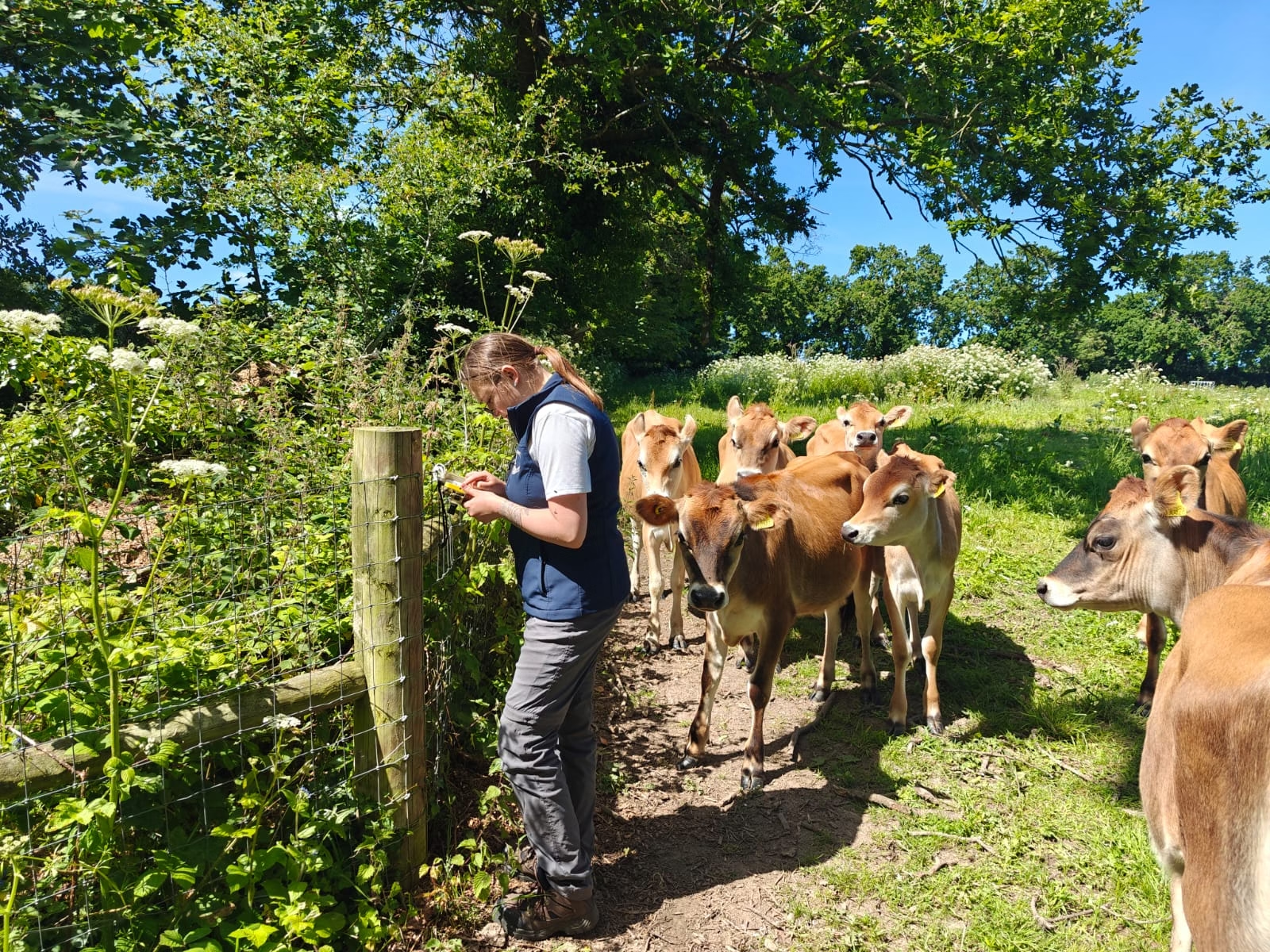
The project combines traditional field survey methods — including live trapping and habitat assessments — with cutting-edge passive acoustic monitoring, deploying detectors across a 1km grid of up to 120 sites island-wide. This rigorous, landscape-scale approach allows the team to build a far more detailed and reliable picture of where these species are, how they use different habitats, and how their populations may be shifting over time.
Alongside gathering data on the target shrew species, the acoustic detectors capture a wealth of additional biodiversity data — including bats, birds, insects, and amphibians — making this a genuinely multi-species dataset with wide research value for Jersey’s natural environment.

A Collaboration with the BTO
One of the most exciting elements of the project is its collaboration with the British Trust for Ornithology to develop an acoustic classifier specifically for small mammals in the Channel Islands. This classifier will allow passive acoustic monitoring to be used to identify and track trends in species distribution and abundance across the island — a tool that, once developed, could be applied far beyond Jersey and represents a significant contribution to ecological survey methodology more broadly.
Why This Matters
Small mammals are notoriously difficult to survey. Traditional live trapping is time-intensive, requires repeat visits, and can only cover a limited number of sites at any one time. Passive acoustic monitoring offers the potential to survey at a scale and intensity that simply isn’t possible through trapping alone — but only if we can reliably identify species from their acoustic signals. That’s exactly the gap Hannah’s PhD is working to fill.
The implications extend well beyond shrews. A validated PAM methodology for small mammals would be a valuable addition to the ecological toolkit across the Channel Islands and beyond, with potential applications for conservation monitoring, environmental impact assessments, and long-term biodiversity tracking.
This funding from the Jersey Community Foundation means this vital work can continue — and we couldn’t be more proud of Hannah for securing it. This is a testament to the quality and ambition of the research, and to the real-world conservation value it will deliver for Jersey and the wider Channel Islands.
Watch this space — exciting results are coming! 🌿🦇